From a token to a paid holder, in six steps.
Each step says what to expect and what is worth knowing before it surprises you. The second kind matters more: most of the ways this looks broken are it refusing to pay from numbers it cannot stand behind, and knowing which is which saves you assuming the scan failed.
Attach your token
Connect the wallet you want to administer with, paste the mint, and sign. The signature costs no gas and moves nothing — it proves the wallet is yours, and the wallet that signs becomes the admin.
What to expect — The project appears immediately, unverified, with no holders yet. Name and symbol are cosmetic; the decimals, supply and token program are read from the chain.
Worth knowing — There is no anonymous attach. Without a connected wallet the button says so rather than failing after you fill the form in.
Go there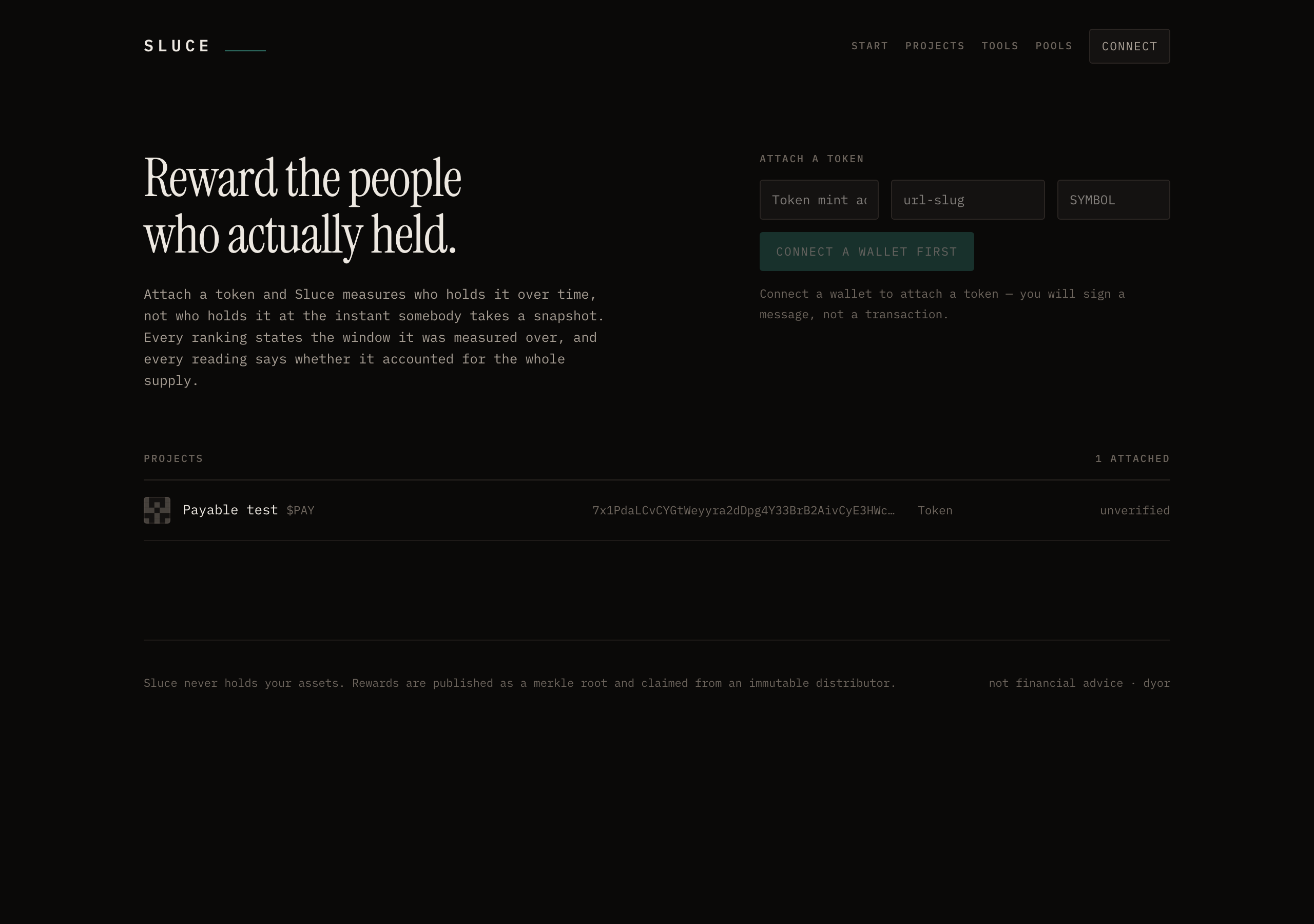
Take a reading
A reading scans every token account for your mint and records each holder’s balance. Scores are time-weighted from these readings, so one reading is a starting line rather than a leaderboard.
What to expect — A small token finishes in seconds. A large one is paged over minutes and the panel shows the stage and the count as it goes.
Worth knowing — The scan must reconcile against total supply EXACTLY, in both directions. A big, actively traded token often cannot: paging it takes minutes, balances move between pages, and the same tokens get counted twice. That board will never be payable, and it is not a bug you can fix — start with something under a few thousand holders.
Your projects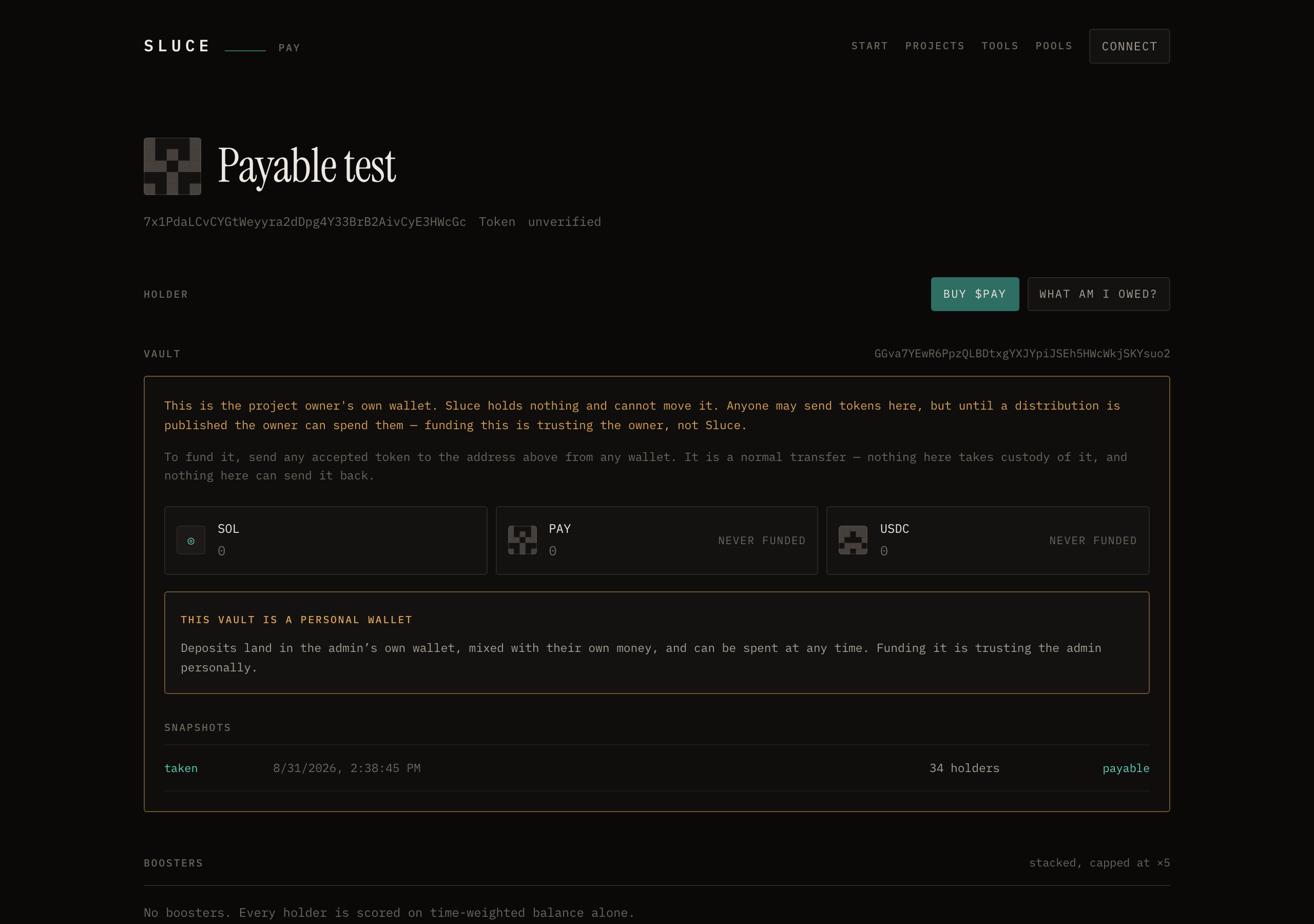
Add boosters, if you want them
A booster multiplies a holder’s position for something checkable on chain: holding another token, or having tokens locked. You set the multiplier and the condition; everyone can see both.
What to expect — Boosters resolve at the snapshot instant, and the board says which ones fired.
Worth knowing — A booster that cannot be evaluated is DENIED and named — never silently granted. While one is unresolved the board refuses to call itself payable, because the scores are not the ones you configured.
Your projects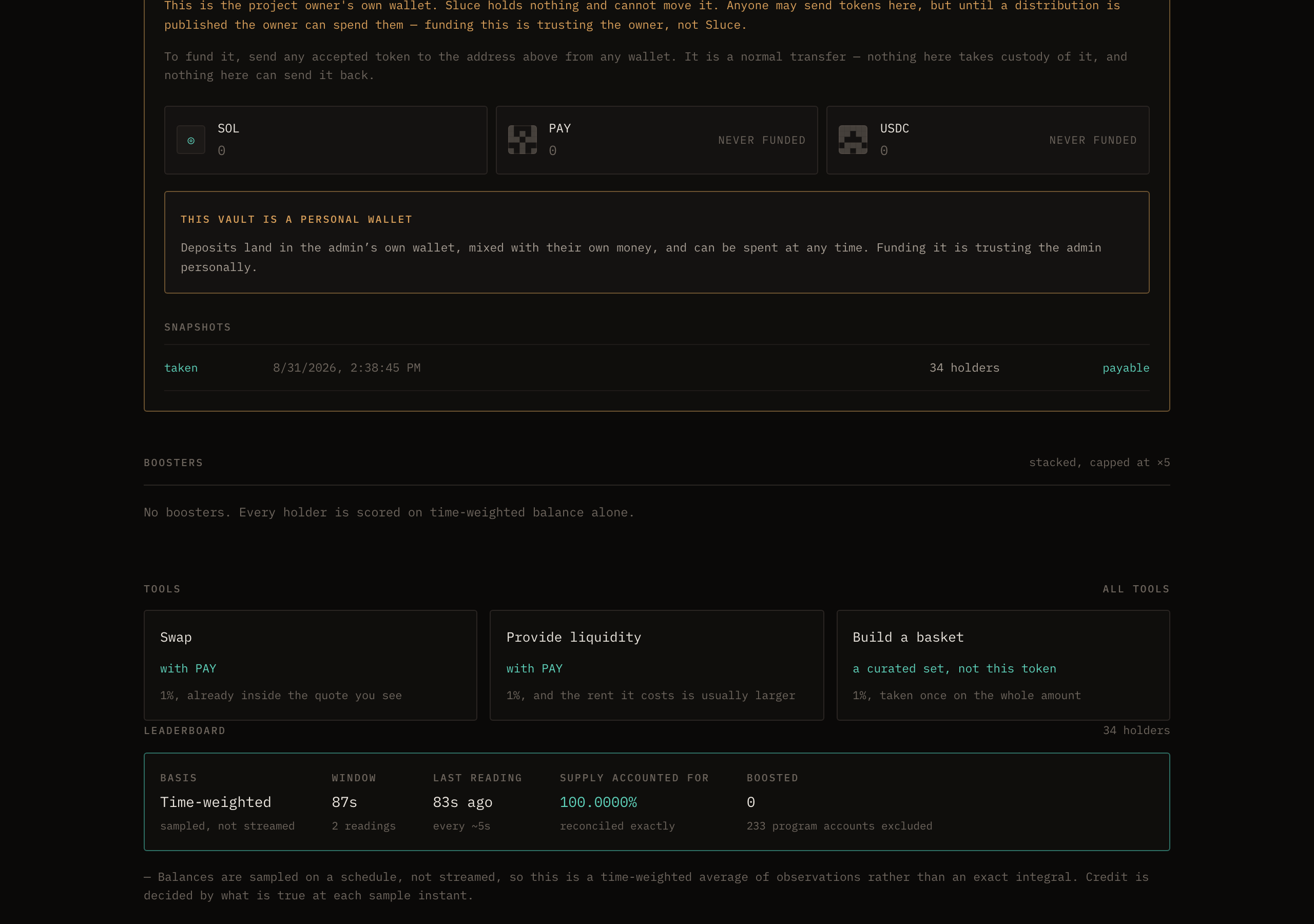
Announce the snapshot
Announcing publishes the terms — the curve, the multiplier cap — before any numbers are known, so nobody can pick the scoring after seeing who it favours.
What to expect — Holders see that a snapshot is coming. Nothing is measured yet.
Worth knowing — The announcement deliberately does not name an exact instant. Scores are time-weighted over the whole epoch, so buying just before it closes earns almost nothing — announcing a moment would just be publishing the farm.
Your projects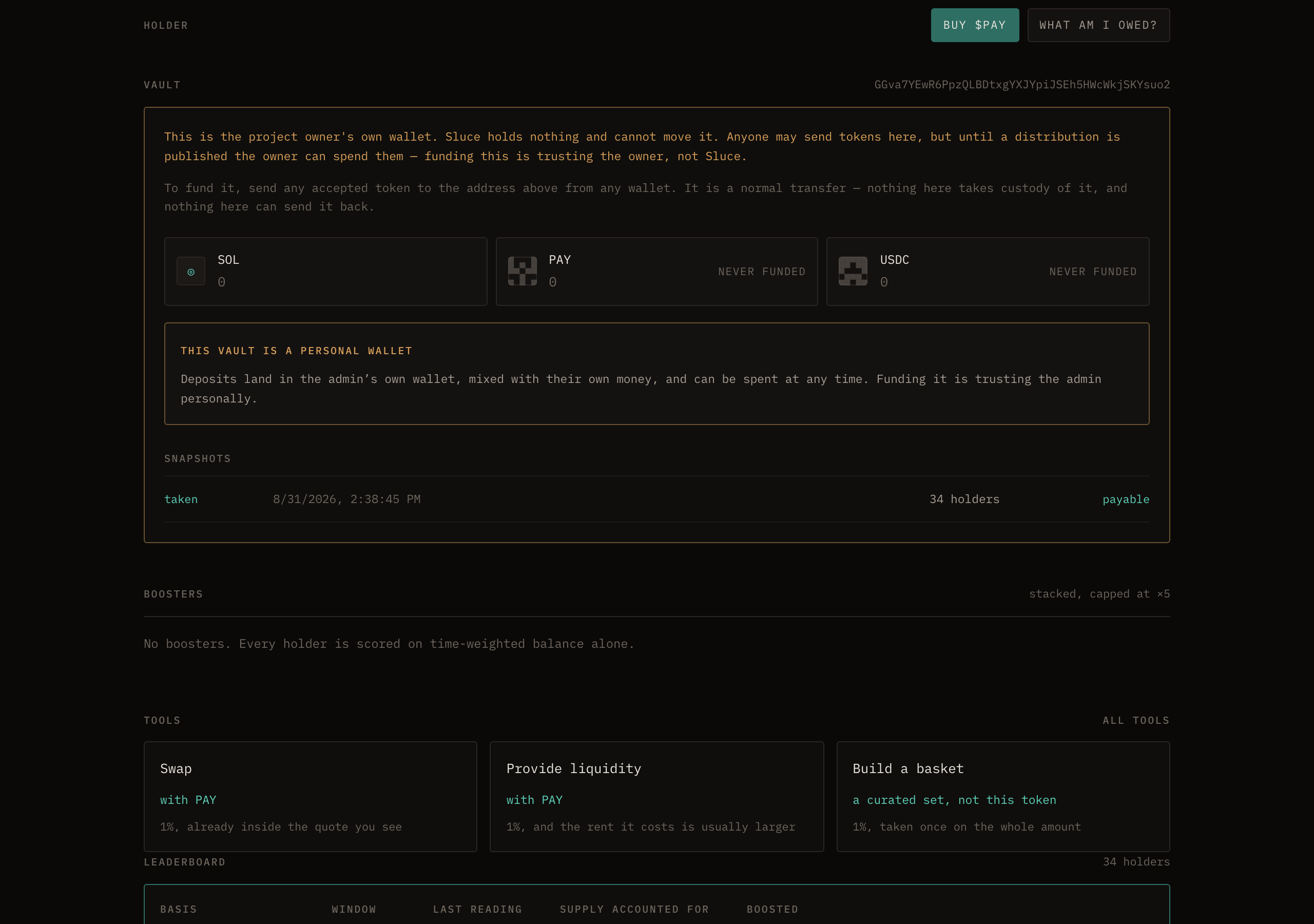
Take it
Taking freezes the board: every holder, their weight, and the boosters that fired, recorded at one slot.
What to expect — The row shows the stage and accounts read while it runs, and the tab title carries the result if you switch away. It survives being interrupted and resumes.
Worth knowing — If it says "not payable", the reasons are listed on the row. Read them — each one is a specific thing, not a general failure.
Your projects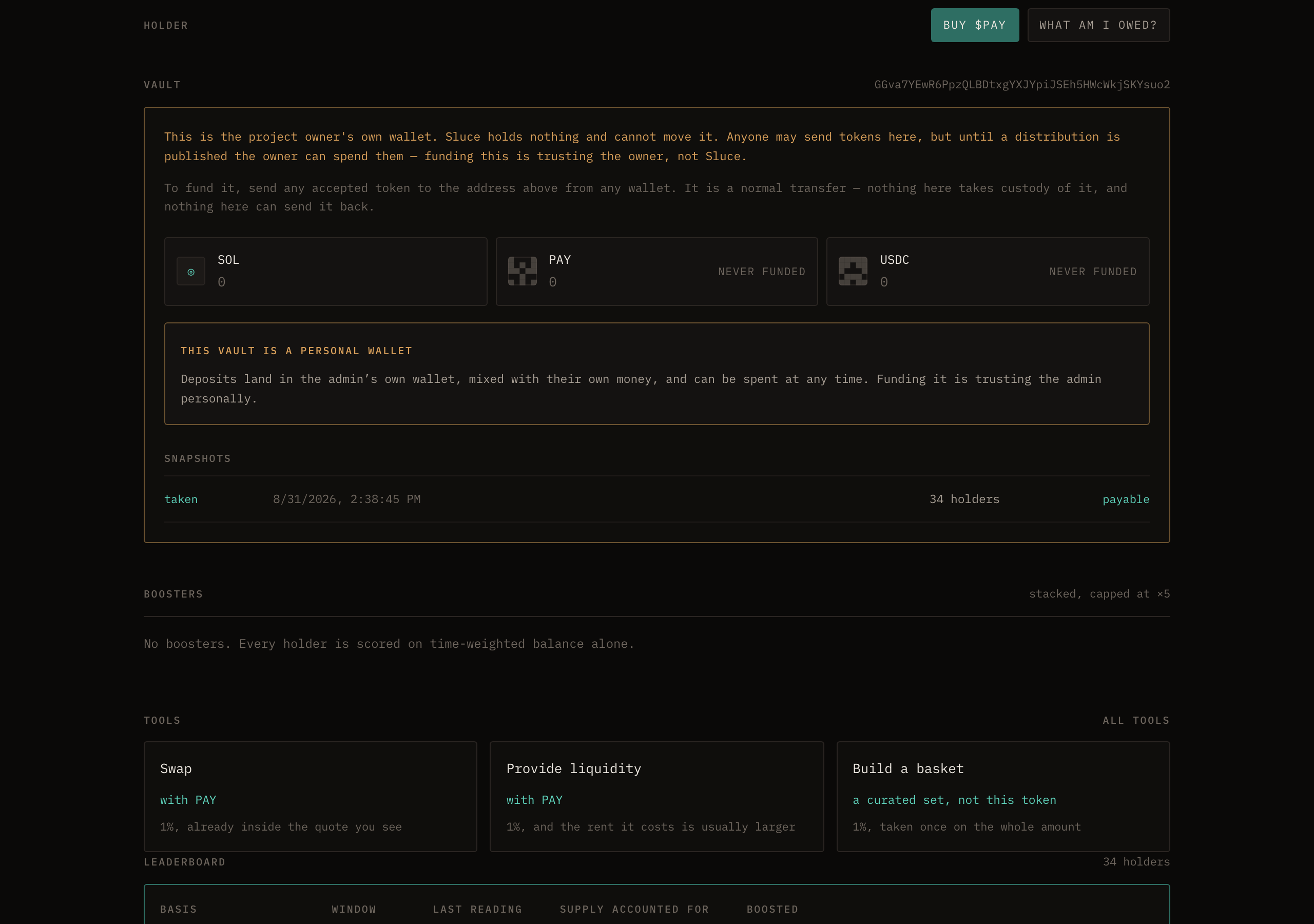
Fund the vault and pay
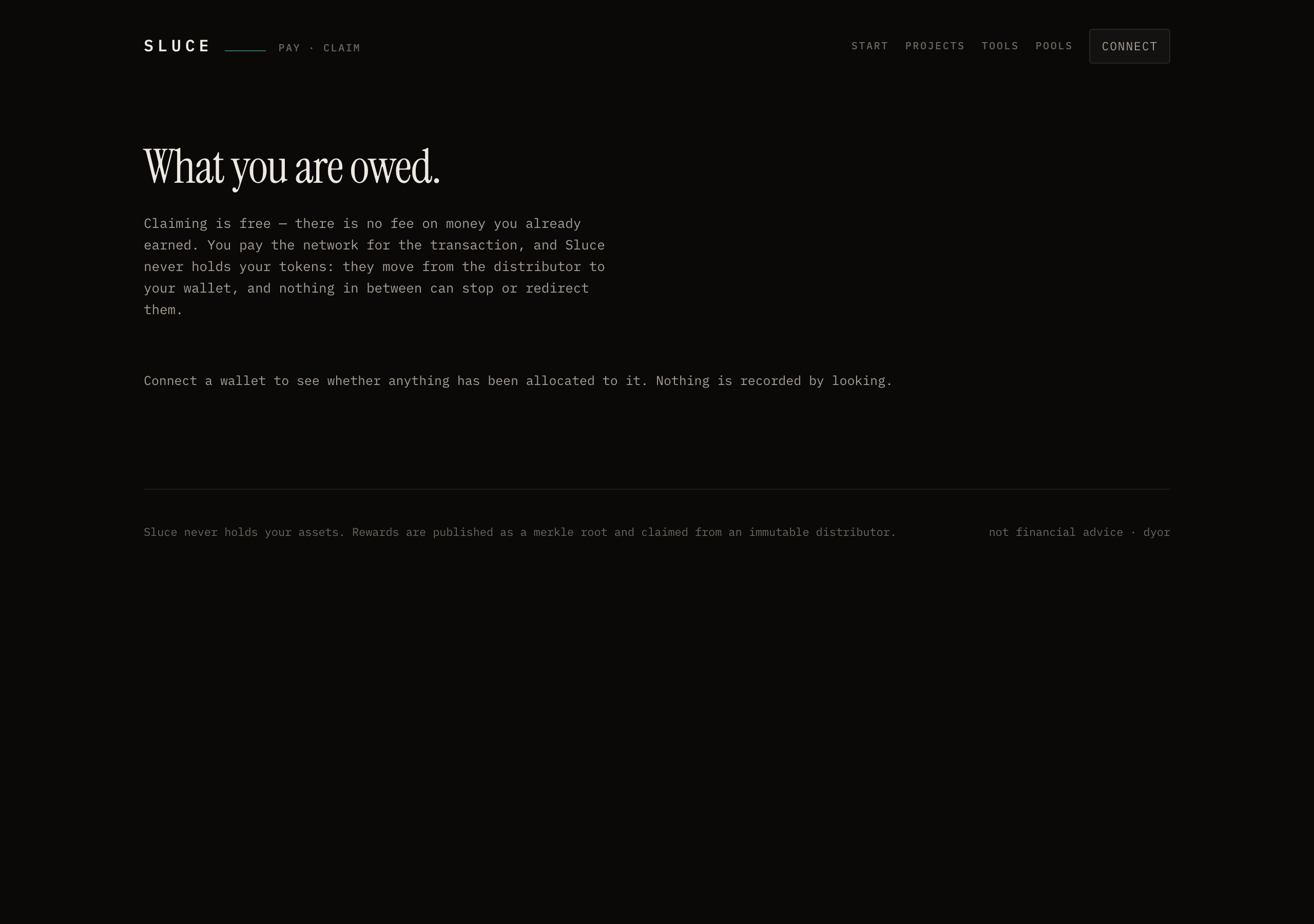
Anyone can put tokens into the vault; only you can crank a distribution. Slucex takes 3% to cover the infrastructure, and the rest is split by the frozen weights.
What to expect — Holders claim from the published tree. The allocation is reproducible by anyone who can read the board.
Worth knowing — Only a payable snapshot can be paid from. That is the whole point of every refusal above: a total that cannot be reconciled cannot be honestly divided up.
Your projects